

Mr. Sivaraman Subramanian is a highly experienced Consultant Orthopaedic Surgeon specializing in hip and knee reconstruction. Notably, he pioneered the use of robotic technology in his region, introducing it to the first rural district NHS hospital to enhance surgical precision and patient outcomes.
What is Robotic-Assisted Knee Replacement?
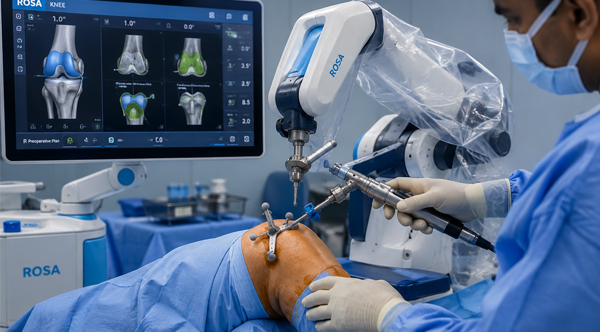
Unlike traditional surgery, robotic-assisted knee replacement uses advanced computer technology and a robotic arm to assist the surgeon. It is important to note that the robot does not perform the surgery. Mr. Subramanian remains in full control at all times; the robot acts as a high-precision tool to ensure the procedure is executed exactly as planned.
How the Procedure Works
The process is divided into three key stages designed to provide a "bespoke" fit for your new knee:
1. Personalised 3D Planning:
Before or during surgery, specialized imaging (such as a CT scan) creates a 3D virtual model of your unique knee anatomy. Mr. Subramanian uses this model to pre-plan the exact size, position, and alignment of your implant.
2. Real-Time Mapping:
During the operation, the robotic system "maps" your knee’s range of motion and ligament tension. This allows Mr. Subramanian to make micro-adjustments to the plan in real-time, ensuring the best possible balance for the joint.
3. Robotic-Guided Precision:
When removing the damaged bone, the robotic arm uses "haptic" feedback. This creates virtual boundaries that prevent the surgical tools from moving outside the pre-planned area, protecting the surrounding healthy bone and soft tissues.
Benefits to the Patient
By combining Mr. Subramanian’s extensive surgical expertise with robotic precision, patients may experience several advantages:
• Improved Accuracy: Implants are placed with sub-millimeter precision, tailored to your specific anatomy.
• More Natural Feel: Better alignment and ligament balancing often result in a knee that feels more "natural" during movement.
• Reduced Tissue Damage: The high level of precision minimizes trauma to the surrounding muscles and ligaments.
• Potential for Faster Recovery: Many patients report less post-operative pain and a quicker return to daily activities due to the less invasive nature of the bone preparation.
• Long-Term Durability: Accurate alignment is a key factor in reducing wear and tear on the new joint, potentially extending the lifespan of the implant.
